


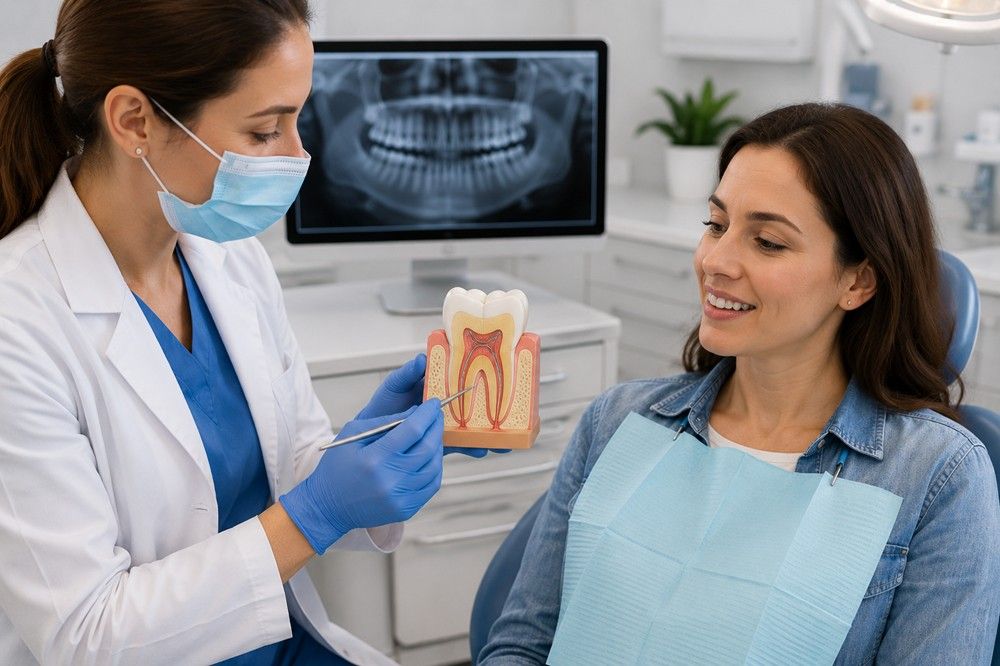
Can a tooth that is damaged be saved? You may be able to save a tooth that has been affected by infection or serious trauma by undertaking root canal therapy near you. The tooth’s infected tissue is removed, the area cleaned, and the tooth sealed to help restore the normal function of the tooth. The treatment will be successful only if the condition of the tooth is good, aftercare is done properly, and regular visits to the dentist are made.
How Does Root Canal Treatment Help Save a Tooth?
When bacteria get into the inner part of the tooth (the pulp), the tooth becomes painful. Deep cavities, cracks or injuries can cause this to happen. This treatment enables the outer healthy part of the tooth to remain intact instead of taking out the entire tooth.
During the procedure, the dental practitioner removes the damaged tissue, cleans the inside of the tooth and fills the space to prevent infection. After the procedure, a dentist near you may recommend a crown for a tooth with a root canal.
How Successful Is Root Canal Therapy?
Root canal therapy near you has a high success rate when performed at the right time and followed with proper care. Many treated teeth can continue to function for many years after the procedure.
The success of root canal treatment depends on:
- The amount of healthy tooth structure remaining.
- The level of infection or damage
- The quality of the treatment
- Maintaining good oral hygiene afterward
- Attending regular dental checkups
Saving a natural tooth can help maintain your bite and avoid the need for tooth replacement options.
Why Is Saving a Natural Tooth Important?
A natural tooth helps support normal chewing and keeps nearby teeth in their proper positions. Removing a tooth may create changes in the bite and may require additional treatments to replace the missing tooth.
Root canal treatment can help:
- Keep the natural tooth in place.
- Restore comfortable chewing
- Maintain normal tooth alignment.
- Support the appearance of the smile.
Preserving the original tooth is often considered when the tooth can be repaired and maintained.
What Signs May Mean a Root Canal Is Needed?
A damaged or infected tooth does not always cause the same symptoms for every person. Some common signs that may require evaluation include:
- Ongoing tooth pain
- Sensitivity to hot or cold foods
- Pain while chewing
- Swelling around the gums
- Darkening of the tooth
- A recurring dental infection
A dental assessment can help determine whether root canal treatment is suitable or if another option is needed.
How Does a Dentist Decide If a Tooth Can Be Saved?
By examining the tooth and reviewing symptoms, the dentist can assess the condition below with the help of dental images. This will determine if there is sufficient healthy tooth structure to support treatment.
A dentist in Glenora may consider factors such as:
- The location of the tooth
- The extent of infection
- The strength of the remaining tooth
- The patient’s overall oral health
Every tooth is different, so treatment recommendations are based on individual needs.
What Happens After Root Canal Treatment?
After treatment, the tooth may need additional protection to restore strength. Following care instructions can help support the long-term condition of the treated tooth.
Helpful steps after root canal treatment include:
- Brushing and flossing regularly
- Avoiding excessive pressure on the treated tooth until it is restored
- Attending follow-up appointments
- Maintaining routine dental care
A restored tooth can continue to support daily activities when cared for properly.
Can Root Canal Treatment Prevent Tooth Removal?
In many situations, root canal treatment is recommended because it may allow a damaged tooth to remain in the mouth. However, not every tooth can be saved. If the tooth has severe damage or cannot support restoration, other options may need to be considered.
A dentist in West Edmonton can evaluate the condition of the tooth and explain whether root canal treatment is a suitable choice.
Keep Your Natural Smile Strong With Expert Guidance!
Taking timely action for tooth concerns can help protect your natural smile, maintain daily comfort, and support better long-term oral health. Schedule a consultation with Capital Dental Choice to receive a complete dental assessment, learn more about suitable treatment options, and get personalized guidance designed to address your concerns, support your natural teeth, and help you maintain a healthy, confident smile for years to come.
FAQs
How long does a root canal-treated tooth last?
A root canal-treated tooth can last many years with proper care, regular dental visits, and a suitable restoration to protect it.
Is root canal treatment only needed for painful teeth?
No. Some teeth may have infections without causing severe pain. A dental examination can identify problems that may not be obvious.
Does root canal treatment remove the whole tooth?
No. Root canal treatment removes the infected tissue inside the tooth while keeping the outer tooth structure.
Can a tooth get infected again after a root canal?
In some cases, a treated tooth may develop problems again. Regular checkups help monitor the teeth and address concerns early.