


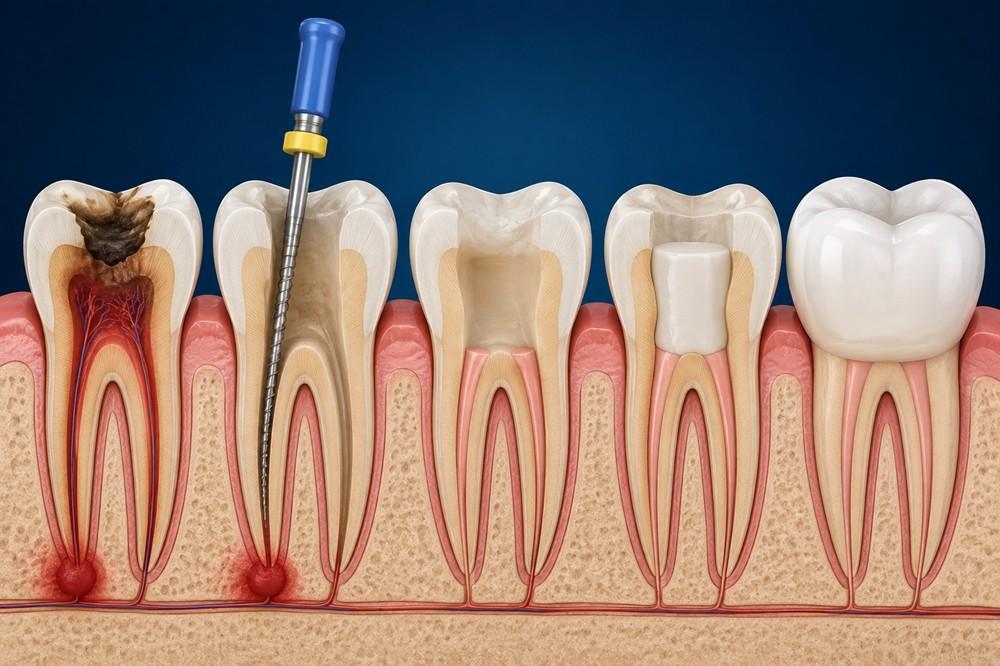
Do you always need a crown after a root canal? The answer is not the same for every case, but in most situations, yes, a crown is strongly recommended. A dentist in West Edmonton often advises placing a crown after treatment because the tooth becomes weaker over time. Understanding why this happens and when a crown is truly needed can help protect your tooth for the long term.
What Happens to a Tooth After a Root Canal?
During root canal therapy near you, the infected pulp inside the tooth is removed, and the space is cleaned and sealed. This saves the tooth from infection, but it also changes its structure.
After treatment:
- The tooth no longer has a nerve or blood supply.
- It becomes dry and less flexible.
- A large portion of the inner structure may be removed.
- The outer enamel becomes more likely to crack.
Because of these changes, the tooth is no longer as strong as a natural, healthy tooth. Even though it may feel normal, it needs extra protection to handle daily use.
Why are Dental Crowns Commonly Recommended?
The dental crowns near you service is often suggested because it provides a strong outer covering for the treated tooth. A crown fits over the entire tooth like a cap and helps restore both strength and function.
Reasons crowns are recommended:
- Protects weak teeth from breaking
- Restores normal chewing ability
- Prevents further damage or wear
- Improves the look of the tooth
- Seals the tooth from bacteria
Without a crown, the tooth is more likely to crack under pressure, especially when chewing hard foods.
Do All Teeth Need a Crown After a Root Canal?
Not every tooth needs a crown, but many do. It depends on where the tooth is in your mouth and how much of it is left after treatment.
Teeth that usually need crowns:
Molars (back teeth)
These teeth handle the most pressure when chewing and grinding food. Without a crown, they are very likely to break.
Premolars
These teeth also take part in chewing and may need protection depending on their condition.
Teeth that may not always need crowns:
Front teeth (incisors and canines)
These teeth are used mainly for biting rather than grinding. If they remain strong after treatment, a filling may sometimes be enough.
Even when a crown is not placed immediately, regular monitoring is important to ensure the tooth remains stable.
What Happens If You Do Not Get a Crown?
Choosing not to get a crown after a root canal may seem fine at first, but it can lead to problems later.
Risks of skipping a crown:
- Cracks forming in the tooth over time.
- Sudden tooth breakage while eating
- Need for tooth removal if the damage is severe.
- Infection returning due to exposure
- Higher costs for future treatment
A tooth without a crown may function normally for a short time, but it is more vulnerable to damage with everyday use.
How Long Can a Tooth Last Without a Crown?
The lifespan of a root canal-treated tooth without a crown is unpredictable. Some teeth may last months, while others may survive a few years.
Factors that affect how long it lasts include:
- How much of the natural tooth is left
- The location of the tooth in the mouth
- Daily chewing habits
- Oral hygiene practices
In general, teeth that are protected with crowns last much longer and perform better over time.
Benefits of Getting a Crown After a Root Canal
Getting a crown has many long-term benefits that help keep your teeth healthy.
Key benefits include:
- Makes the tooth stronger for everyday use
- Protects the tooth from cracks
- Helps you chew food comfortably
- Improves the look of damaged or dark teeth
- Lowers the chance of future problems
That’s why many dentists recommend getting a crown after a root canal, especially for back teeth.
What is the Crown Procedure Like?
The process of getting a crown is simple and usually completed in two visits.
Step-by-step process:
- The tooth is shaped to prepare for the crown.
- An impression is taken to create a custom fit.
- A temporary crown is placed for protection.
- The final crown is securely fixed in place.
Once completed, the crown looks natural and functions like a regular tooth.
How to Care for a Tooth With a Crown?
Proper care helps extend the life of the crown and keeps the tooth healthy.
Easy care tips:
- Brush twice a day using a soft toothbrush.
- Floss carefully around the crown area
- Avoid chewing very hard foods like ice.
- Visit a dentist near you regularly for checkups.
- Use a mouthguard if teeth grinding is a habit.
With good care, crowns can last many years and provide reliable protection.
Restore Strength and Confidence in Your Smile!
Want to safeguard your treated tooth to ensure its strength for a long time? Make an appointment today at Capital Dental Choice to receive expert care that will strengthen your tooth, enhance its functionality, prevent future issues, and promote a bright, healthy, and confident smile.
FAQs
Is a crown always needed after a root canal?
No, not always. But it is usually suggested, especially for back teeth that do most of the chewing.
Can a tooth break after a root canal if there is no crown?
Yes, the tooth becomes weaker after treatment so that it can crack or break more easily without a crown.
How soon should a crown be placed after a root canal?
It is usually recommended to undergo treatment within a few weeks to prevent damage to the treated tooth.
Does getting a crown hurt?
No, the procedure is done under local anesthesia and is generally comfortable.