


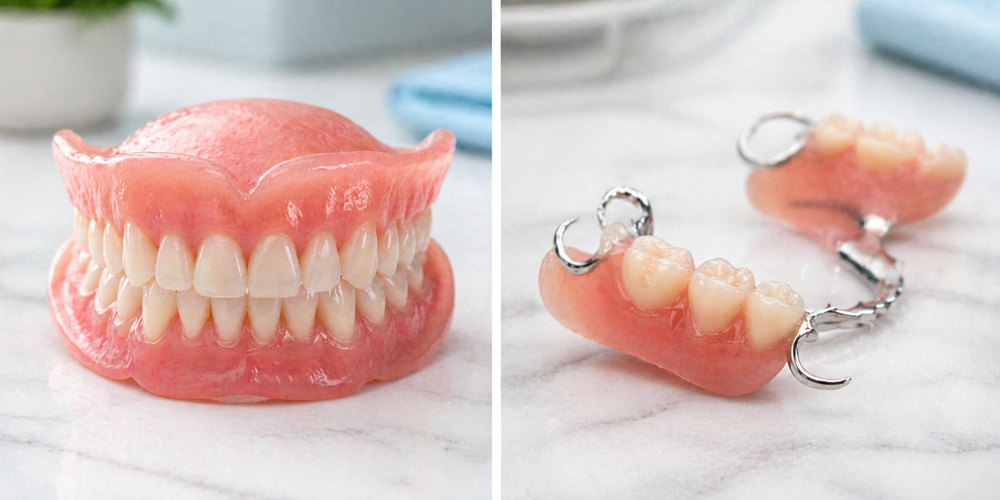
Are you thinking about getting dentures and wondering which type is right for you? Losing teeth can affect your smile, chewing, and speech, so choosing the right dentures, complete or partial, can make a big difference in comfort and confidence. This guide explains the main differences, benefits, and things to consider when picking dentures.
What are Complete Dentures?
Complete dentures are made to replace the totality of teeth present in the arches. They are perfect for those who have disdained most or all of their natural teeth. These dentures fit the mouth and rest on the gum tissues.
Advantages of Full Dentures:
- Brings back chewing capability.
- Enhances face shape and look.
- Aids in speech clarity.
- Customizable to match natural tooth colour and shape
Complete dentures can significantly improve confidence and quality of life for people dealing with extensive tooth loss. For a detailed understanding, refer to the complete guide for complete dentures to learn about materials, fitting, and maintenance.
What are Partial Dentures?
Partial dentures are used to replace certain teeth. They connect to your actual teeth with metal clasps or similar parts and fill in the gaps.
Advantages of Partial Dentures.
- Safeguards your remaining teeth.
- Prevents teeth from shifting out of position.
- Assists with chewing and talking normally.
- Easily removable for convenient cleaning.
- Can be detached for easy cleaning.
Partial dentures can be a cheaper alternative for those who don’t need a full set of teeth but wish to retain function and appearance.
Key Differences Between Complete and Partial Dentures
The denture you choose depends on how many teeth you are missing, your mouth health, and your preference. There are a few differences:
- Coverage: Complete dentures are used when no teeth remain, and partial dentures are used when only a couple of teeth are missing.
- Support: Dentures are held in place on the gums. Partial dentures use the existing teeth for stability.
- Care: Clean both types of dentures every day. Partial dentures may need more fixes as your teeth change.
- Cost: Complete dentures usually cost more but can last a long time.
How to Know Which Denture Is Right for You
To know the right denture for you, consult a professional at a dental clinic in West Edmonton. Take the following factors into account.
- Number of Missing Teeth: A complete denture works for a full arch of missing teeth, while a partial denture works for smaller gaps.
- Oral Health: Healthy gums and remaining teeth are necessary for partial dentures.
- Lifestyle and Comfort: Some people prefer removable dentures for lifestyle and comfort reasons, whereas some prefer implants to stabilize their dentures.
- Budget: Think about the cost to buy, take care of, and how long they will last.
Denture Care and Maintenance
Adequate care makes dentures near you last longer and keeps the mouth healthy. Follow these tips.
- A soft brush should be used on dentures every day.
- Soak your dentures in denture solution overnight.
- Rinse off food from your dentures after eating.
- Visit the dentist regularly for adjustments.
- Don’t use regular toothpaste on dentures; it can scratch them.
Dentures should be maintained for comfort, infection control and hygiene.
Common Misconceptions About Dentures
Many people avoid dentures because of certain misconceptions. Being informed allows choices to be much easier and to be influenced by facts:
- Myth: Dentures are uncomfortable and painful.
- Fact: Modern dentures are custom-fitted for comfort and stability.
- Myth: Dentures are only for older people.
- Fact: Adults of any age with tooth loss can benefit from dentures.
- Myth: Dentures stop you from eating your favourite foods.
- Fact: Well-fitted dentures let you enjoy most foods.
- Myth: Dentures need complicated surgery.
- Fact: Most dentures are simple, removable, and don’t need surgery.
- Myth: Dentures will always move out of place.
- Fact: Regular check-ups and adjustments keep them fitting well.
Restore Your Smile with Expert Denture Care!
Get your personalized dentures for comfort, functionality, and confidence. Whether for your child or yourself, schedule a consultation at Capital Dental Choice to explore durable, natural-looking options. If you want a smile that works, shines, and boosts confidence, take the first step today with our trusted dentist near you.
FAQs
Can dentures improve speech?
Absolutely. The right denture impacts your speech and pronunciation. Most people adapt quite quickly, but more commonly, getting used to your new dentures may take a few days or up to two weeks before speaking comfortably and clearly.
Do dentures hurt when first fitted?
When you first wear dentures, they may feel uncomfortable, tender and sore. The mouth usually gets used to it. Any ongoing pain can be resolved with minor changes from your dentist to make it more comfortable.
Can dentures be repaired if broken?
Yes, complete and partial dentures can be repaired, relined, or adjusted by a professional. Promptly repairing the dentures stops further damage and maintains the dentures’ proper function, safety and effectiveness.
Are there options besides dentures?
Certainly, people who want more stable results for the long-term may have a dental implant, implant-supported denture or hybrid. These options make chewing easier, are more permanent and offer you better comfort.